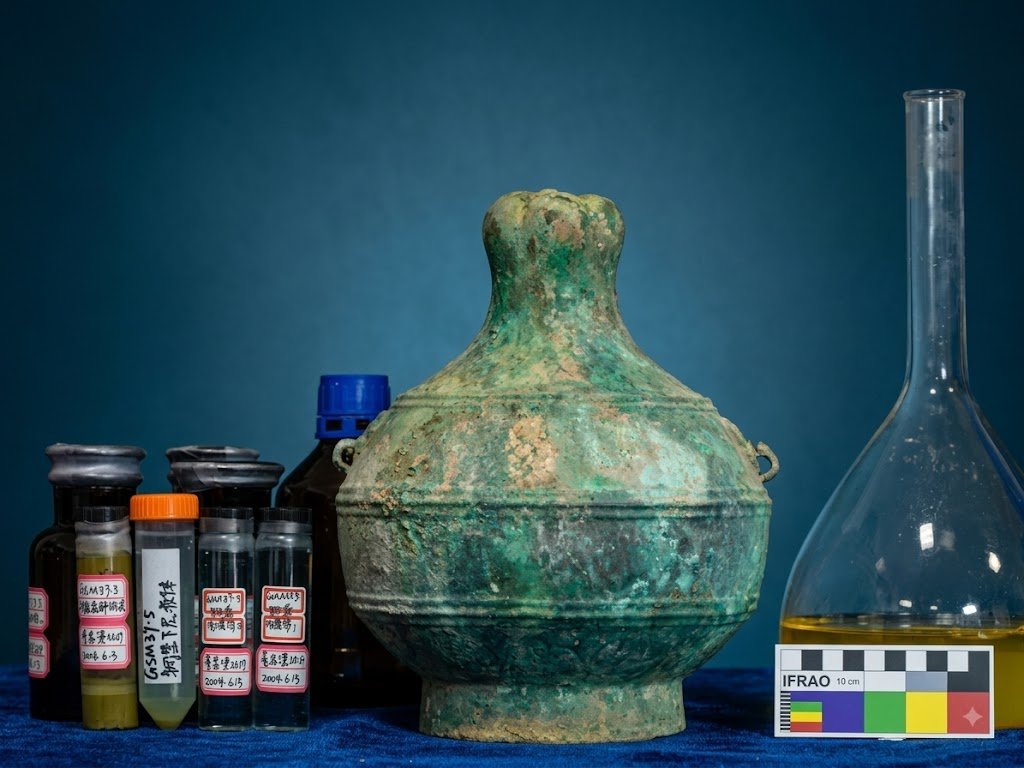

Archaeologists in China have unearthed a sealed jar containing well-preserved, 2,300-year-old wine at the Shanjiabao cemetery, located just two kilometers from the historic Qin Great Wall in Guyuan, Ningxia region.
According to a study published in the Journal of Archaeological Science, the sealed vessel dates back to the Warring States period. Despite the passage of over two millennia, the metallic jar remained fully airtight and structurally intact, preserving its liquid contents.
Chen Rourou, a Ph.D. candidate at Northwest University and the study’s lead author, stated that chemical analysis of the liquid provides unprecedented insights into ancient grain usage, fermentation techniques, and dietary habits during the Qin dynasty era. The nearby Qin Great Wall—celebrated in a famous 1935 poem by Mao Zedong during the Long March—represents one of the earliest defensive wall structures built in ancient China.
Key Highlights of the Discovery:
- Artifact Discovered: Sealed metal jar containing preserved 2,300-year-old wine.
- Location: Shanjiabao Cemetery, 2 km from the Qin Great Wall (Guyuan region).
- Historical Era: Warring States Period / Early Qin Dynasty.
- Scientific Significance: Offers clear evidence of ancient Chinese grain fermentation and brewing technology.
📊 Fact-Sheet Summary
- Site Location: Shanjiabao Cemetery, Ningxia/Gansu region, China.
- Estimated Age: ~2,300 Years (Warring States Period).
- Lead Researcher: Chen Rourou (Northwest University).
- Publication: Journal of Archaeological Science.
- Proximity Landmark: Qin Great Wall.