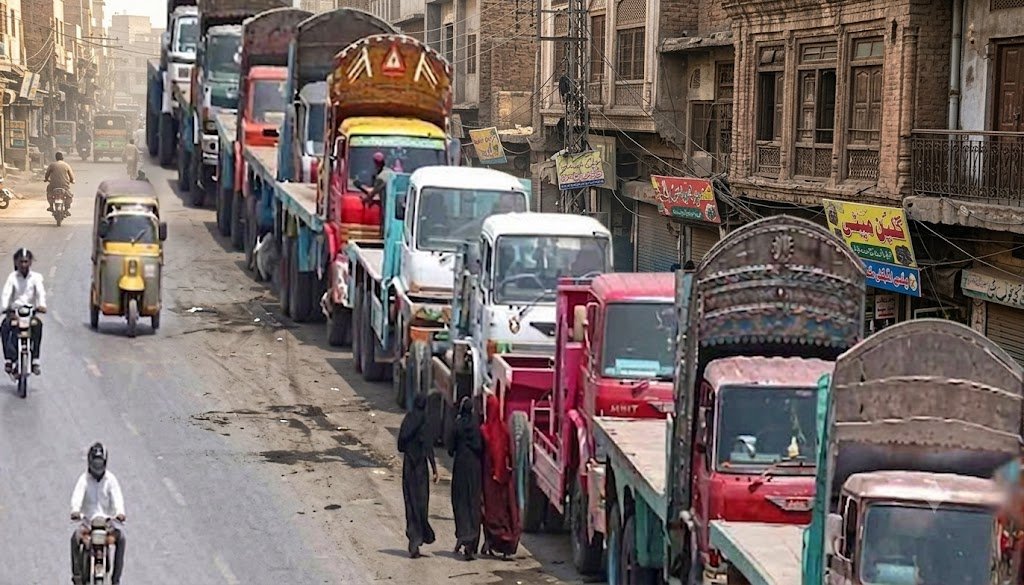

The All-Pakistan Goods Transport Alliance has announced a nationwide, indefinite strike scheduled to begin on Saturday, August 8. Addressing a press conference, Alliance President Malik Shehzad Awan outlined a series of demands concerning rising operational costs, regulatory frameworks, and taxation policies affecting the country’s commercial freight industry.
The alliance has called for the resignation of Petroleum Minister Ali Pervaiz Malik while demanding an immediate reversal of recent hikes in petroleum prices and highway toll taxes.
Key Demands Outlined by the Alliance:
- Fuel Pricing & Taxation Adjustments: Transport leaders are urging the government to revert from daily or short-term fuel price revisions back to a predictable monthly pricing mechanism. Additionally, they demanded a reduction in withholding tax from 7% to 2%.
- Regulatory & Legal Reforms: The alliance requested strict enforcement of axle-load limits, the withdrawal of Customs SRO 1619/2024, and the cancellation of laws targeting the phase-out of 10- to 20-year-old commercial vehicles.
- Driver & Operational Concerns: Demands include the revision of the PKR 9.7 million financial penalty (Diyat) law in accident cases, streamlined issuance of Heavy Transport Vehicle (HTV) driving licenses, and proper parking infrastructure at Karachi Port and Port Qasim.
- Security & Provincial Issues: Freight operators called for improved security along commercial routes in Balochistan and the abolition of mandatory third-party vehicle insurance mandated by the Sindh government.
Industry observers warn that an indefinite freight strike could disrupt supply chains and commodity deliveries across major urban and industrial centers nationwide.
📊 Fact-Sheet Summary
- Organization: All-Pakistan Goods Transport Alliance.
- Key Spokesperson: Malik Shehzad Awan (President).
- Action: Indefinite nationwide freight strike starting August 8.
- Primary Demands: Fuel price reduction/stabilization, lower withholding tax, axle-load enforcement, port parking, and security on provincial highways.
- Potential Impact: Possible supply chain bottlenecks affecting national logistics and commercial goods movement.