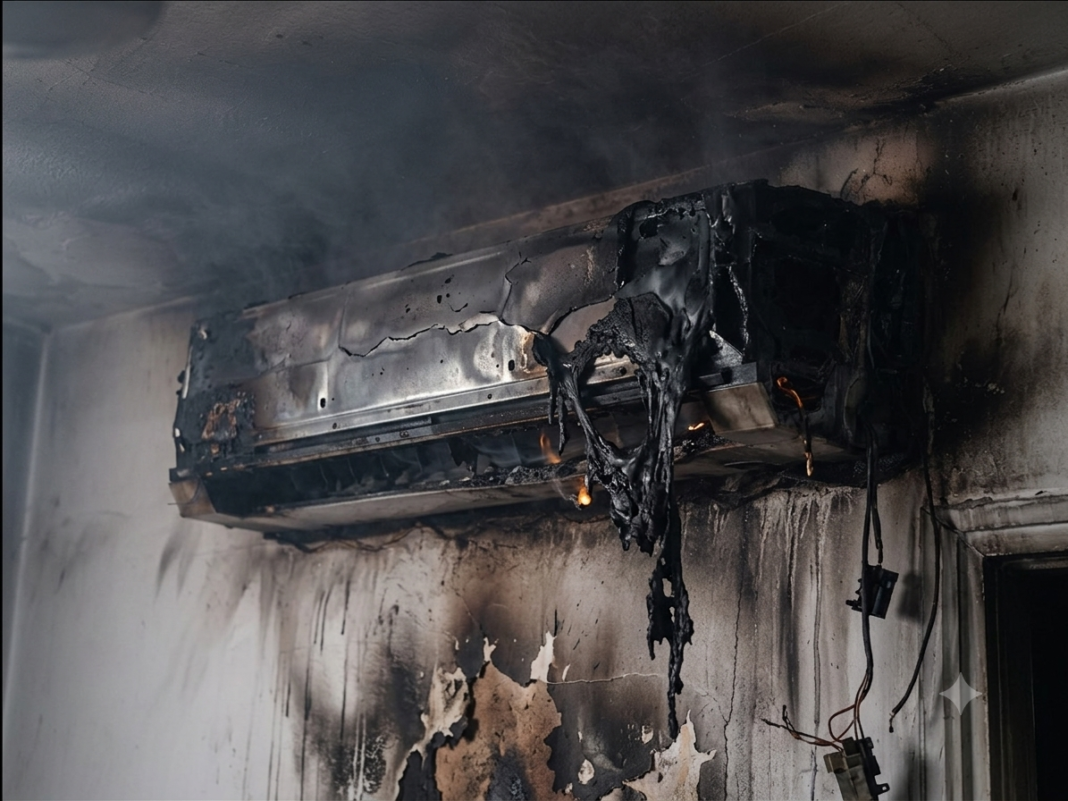

With rising summer temperatures leading many consumers to rely on aging or second-hand air conditioning units, technical experts have issued a public safety advisory highlighting severe fire risks associated with poorly maintained cooling systems.
Faulty wiring, worn-out electrical components, overworking motors, and internal overheating in older AC units are leading causes of severe electrical short circuits and domestic fires, making early detection and preventive maintenance essential for safety.
Critical Warning Signs Identified by Technical Experts:
- Burning Odors: A burning or melting plastic smell immediately after turning on the AC indicates compromised internal wiring, insulation, or motor windings. The unit should be powered off instantly to prevent electrical fires.
- Electrical Sparks & Loose Wiring: Visible sparks near voltage stabilizers or power outlets point to degraded electrical connections, representing an immediate danger that requires certified technical intervention.
- Overheating & Rattling Noises: Unusual metallic clanking, rattling, or excessive casing heat signals failing compressors, loose fan blades, or internal mechanical friction that can destabilize the electrical circuit.
- Drop in Cooling Performance: Reduced cooling efficacy often stems from refrigerant leaks, clogged filtration networks, or compressor strain—forcing the unit to draw higher current and increasing thermal stress on home circuits.
📊 Fact-Sheet Summary
- Subject: Aging Air Conditioners Safety Hazards & Fire Prevention.
- Primary Risks: Short circuits, electrical fires, appliance failure, high repair costs.
- Top Warning Indicators: Burning smell, electrical sparks, abnormal grinding noises, casing overheating, sudden drop in cooling.
- Expert Recommendation: Immediate shutdown upon detecting warning signs; replacement over frequent repairs if the unit is chronically faulty.