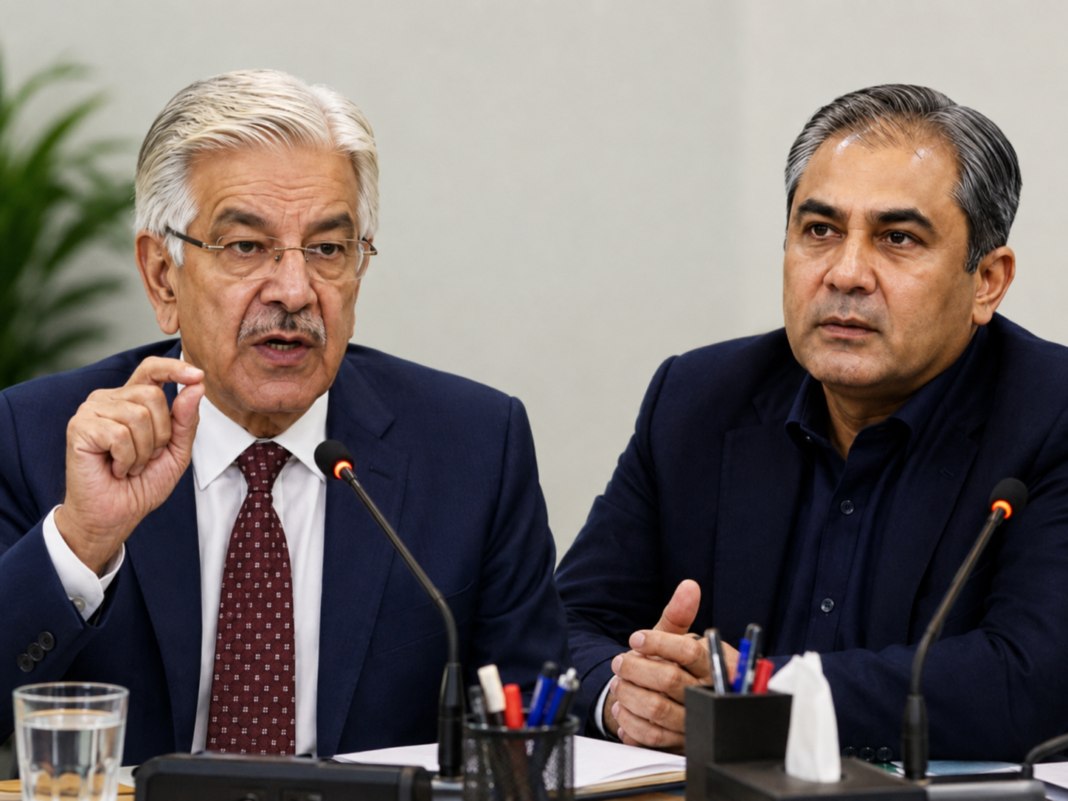

In a candid television appearance, Defense Minister Khawaja Asif asserted that Interior Minister Mohsin Naqvi operates as the most powerful figure in the current administration, claiming he functions outside traditional political systems and is unaccountable even to the Prime Minister on numerous matters.
Addressing the interior minister’s presence within parliamentary proceedings, Khawaja Asif remarked that Naqvi has rarely attended federal cabinet meetings or parliamentary sessions, highlighting a visible detachment from routine executive and legislative processes.
Key Political Developments:
- Cabinet & Parliamentary Presence: The Defense Minister noted that Interior Minister Mohsin Naqvi has attended cabinet meetings only a couple of times and appeared in Parliament a handful of times since taking office.
- Response to Systemic Criticism: Replying to Naqvi’s recent public criticism of the governance setup, Asif remarked that if the interior minister himself is complaining about the system, elected representatives might as well step down.
- Naqvi’s Administrative Vision: The remarks follow Mohsin Naqvi’s statement asserting that the country’s governance model has weakened significantly. Naqvi argued that without creating new administrative units or provinces, Pakistan would remain trapped in identical structural issues over the next decade.
📊 Fact-Sheet Summary
- Key Figures Involved: Khawaja Asif (Federal Minister for Defense) and Mohsin Naqvi (Federal Minister for Interior).
- Core Subject: Political friction, cabinet accountability, administrative reforms, creation of new provinces.
- Defense Minister’s Claim: Naqvi operates autonomously from traditional cabinet oversight and rarely attends parliamentary sessions.
- Interior Minister’s Stance: Existing administrative machinery has failed; establishing new provinces/units is essential for long-term progress.